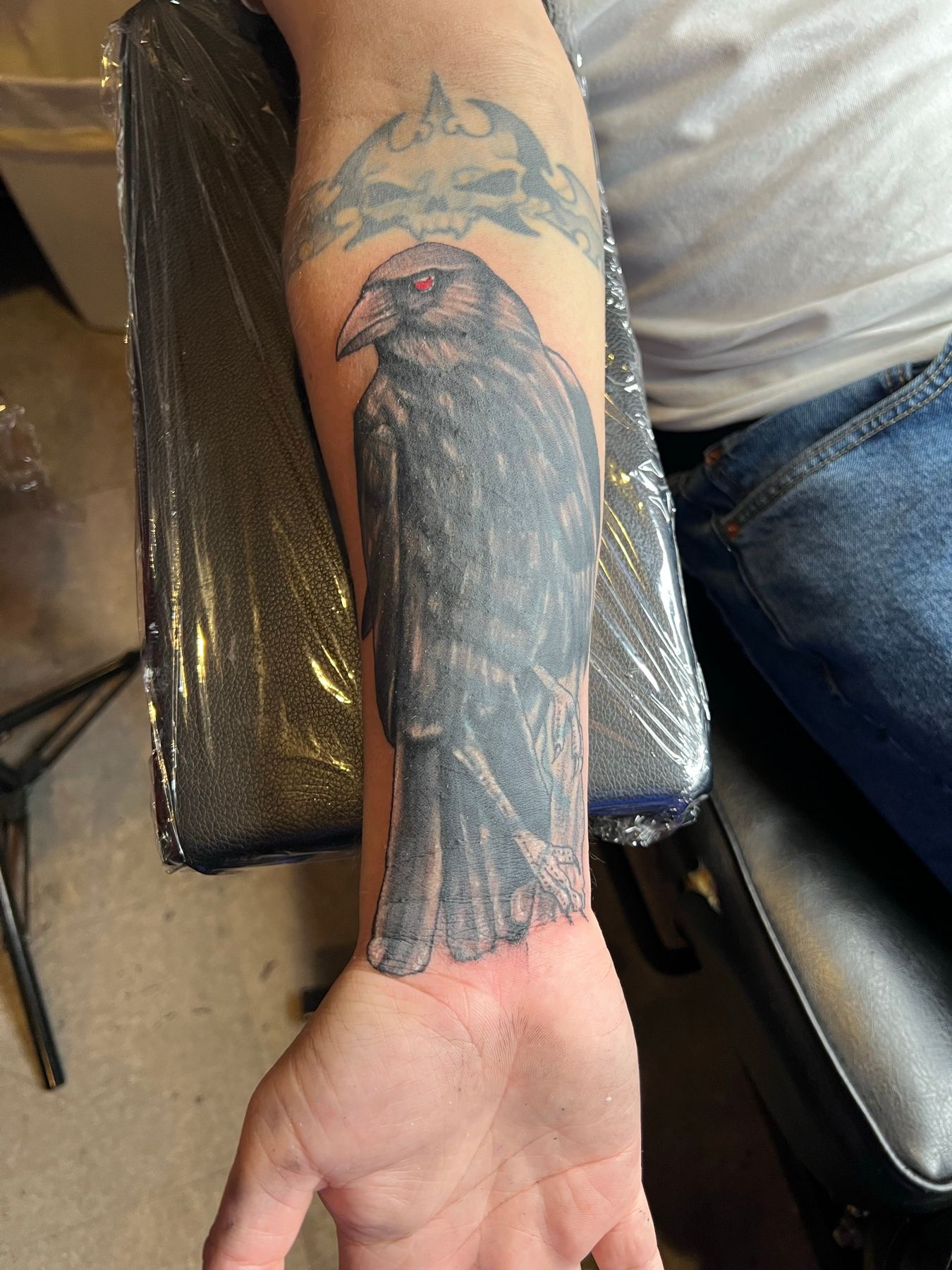
Faded barbwire reworked into a black & grey skull and clock
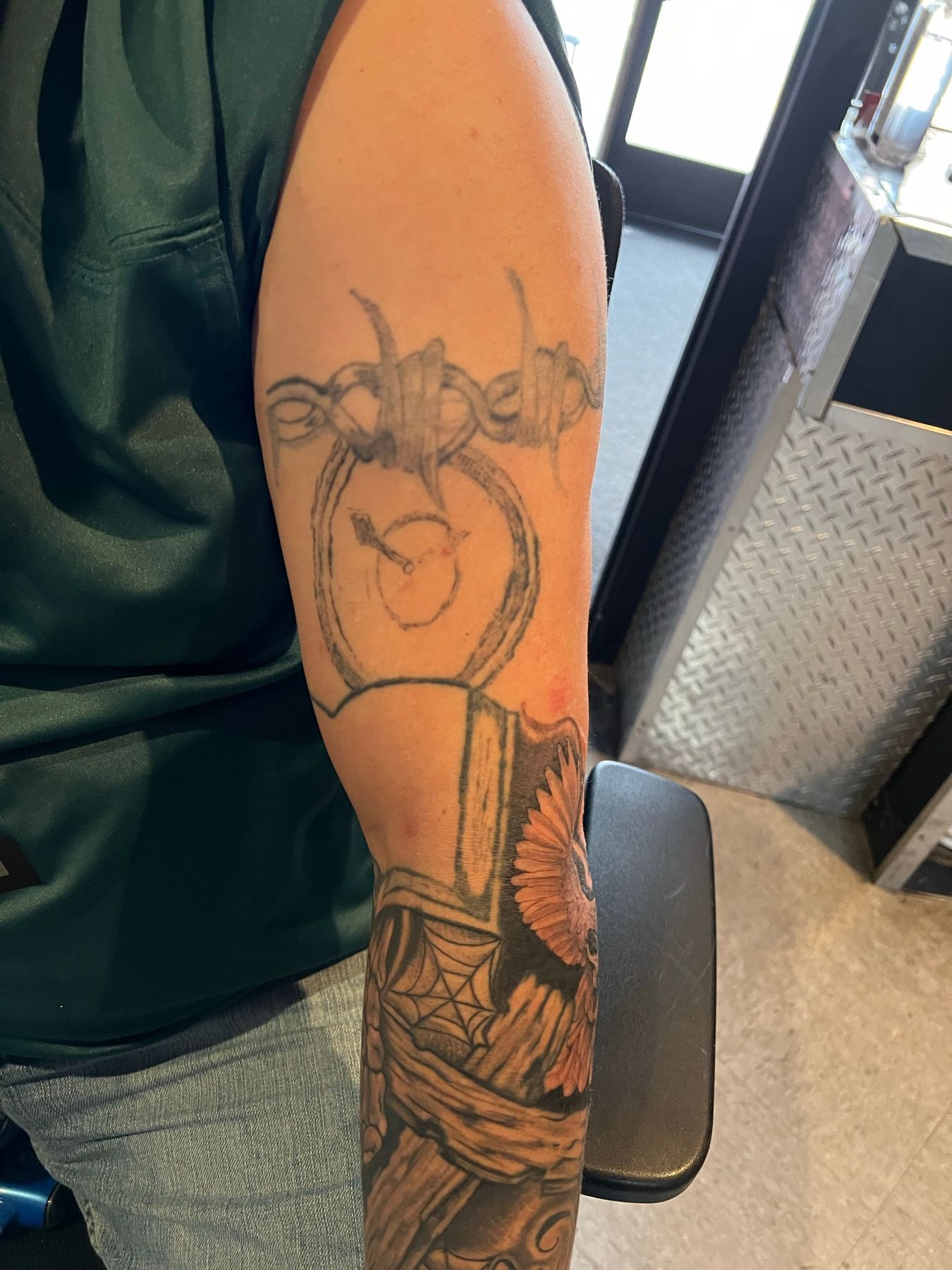
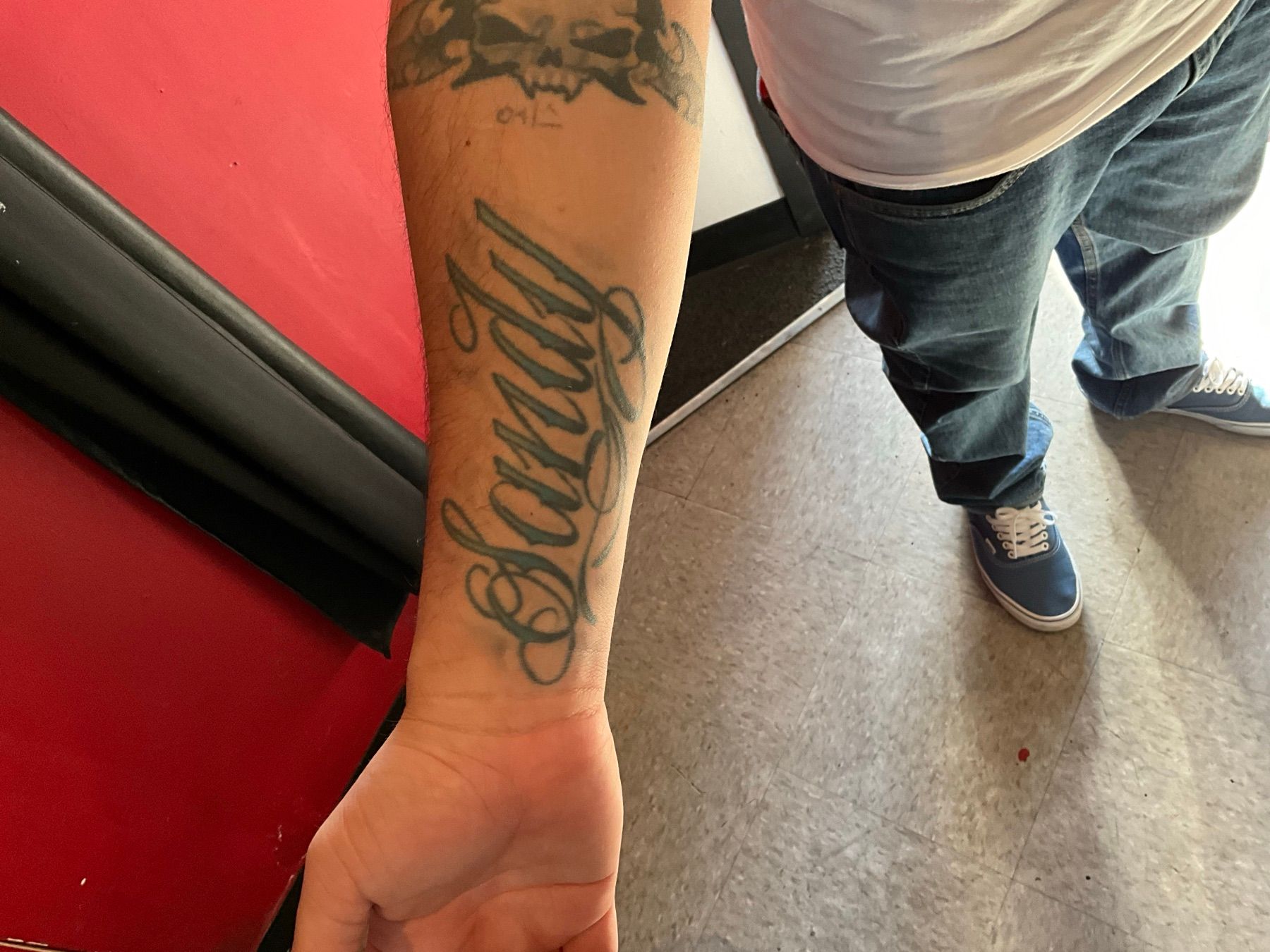
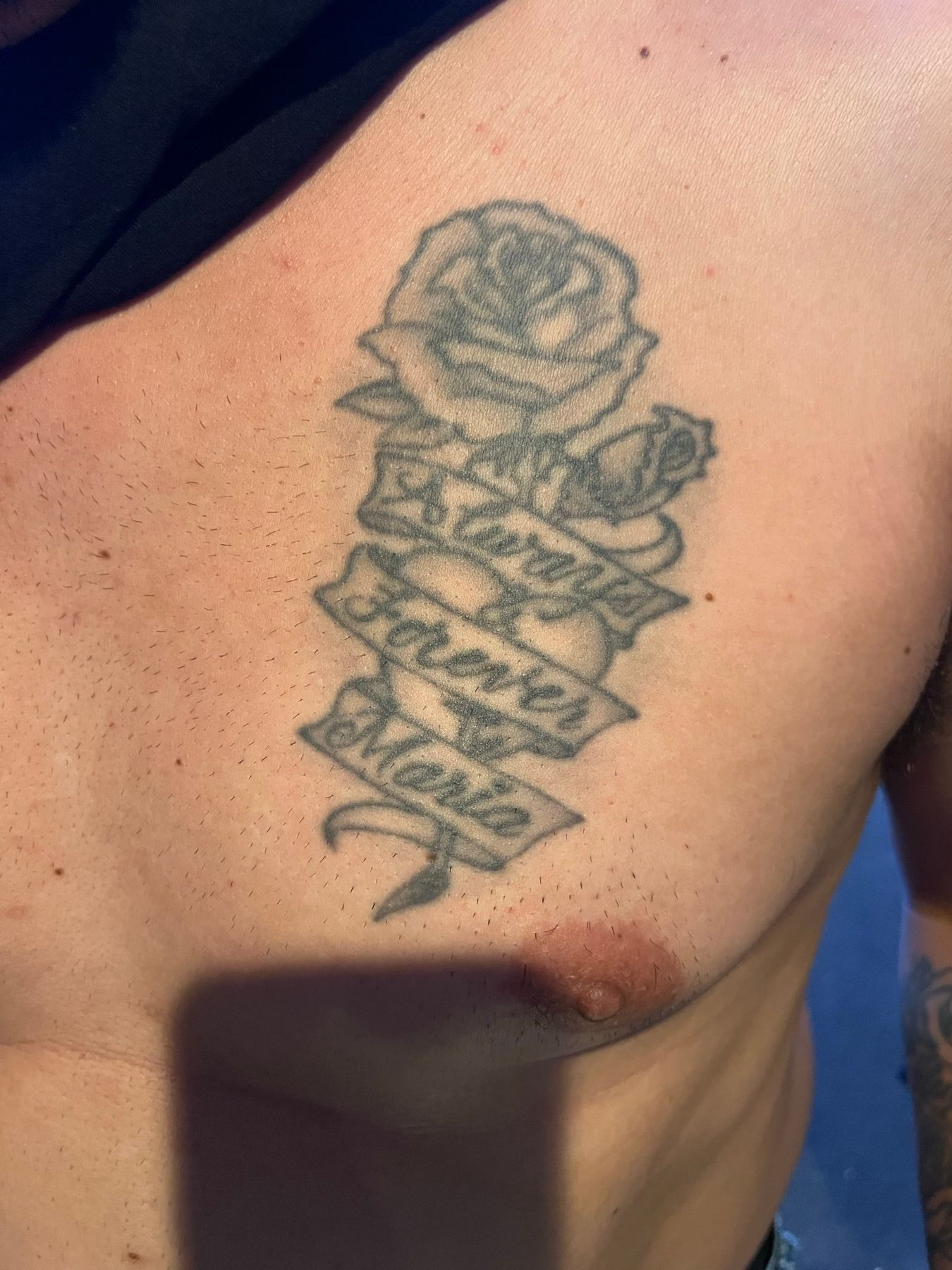
Before 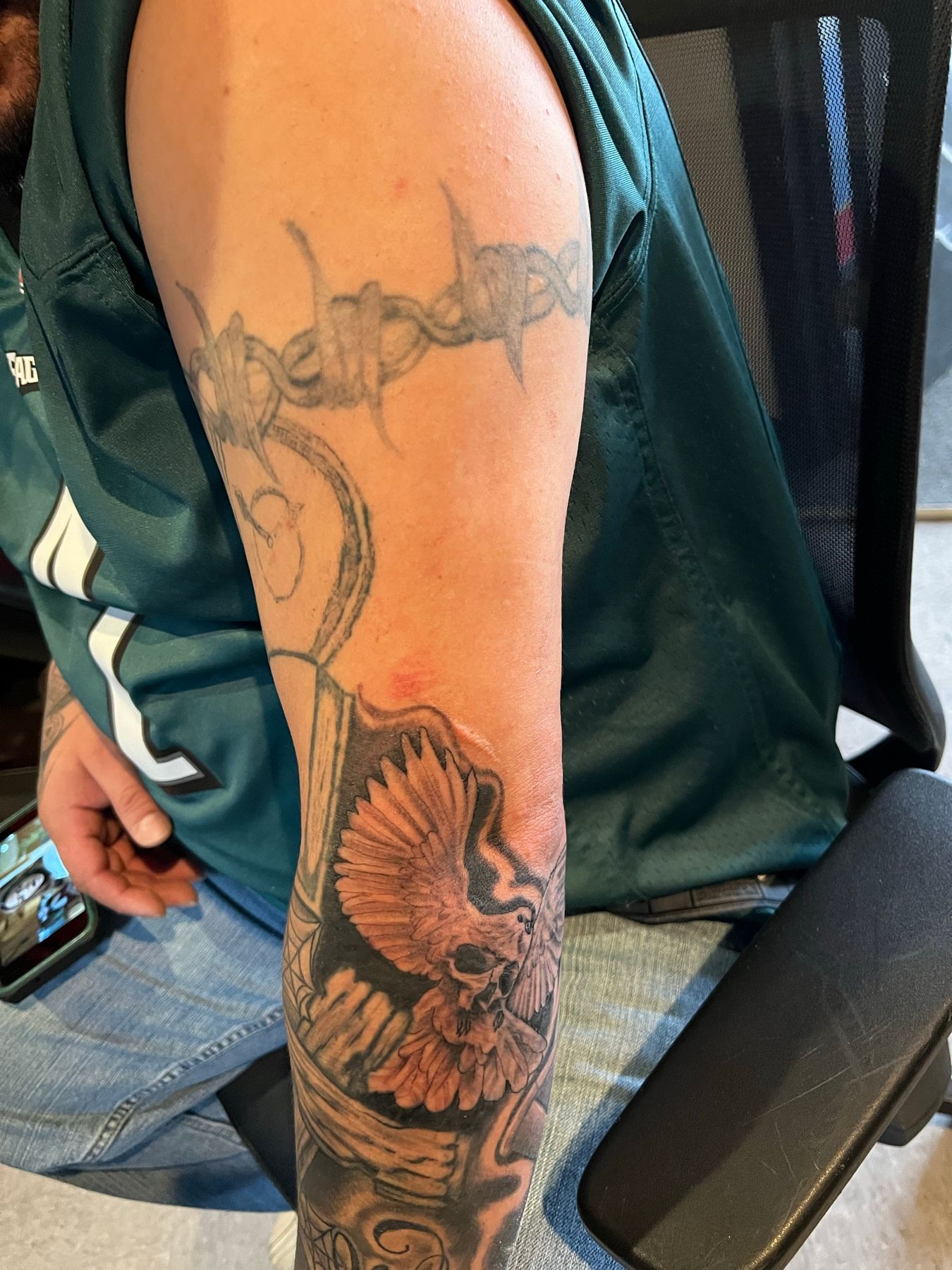
Before 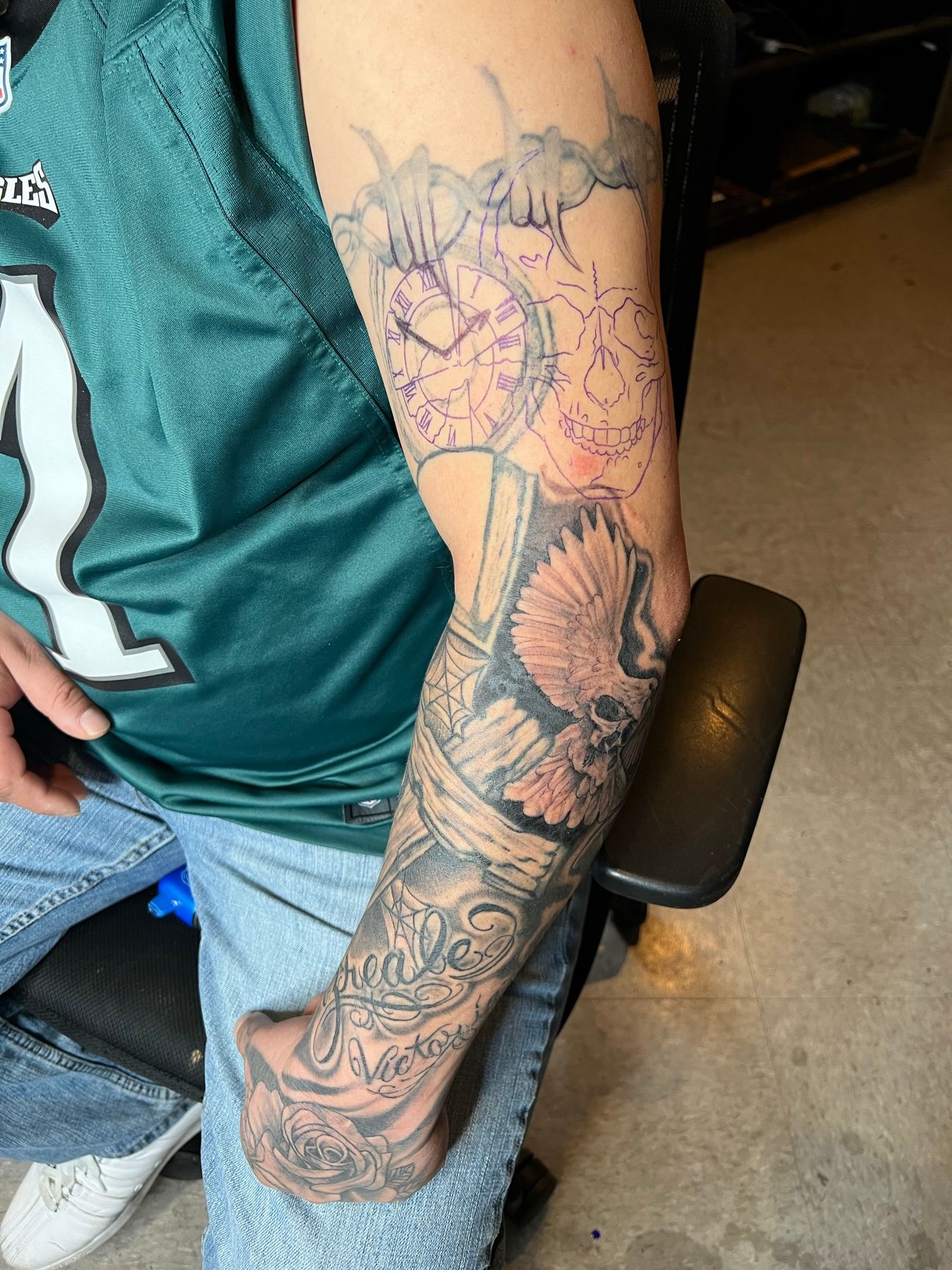
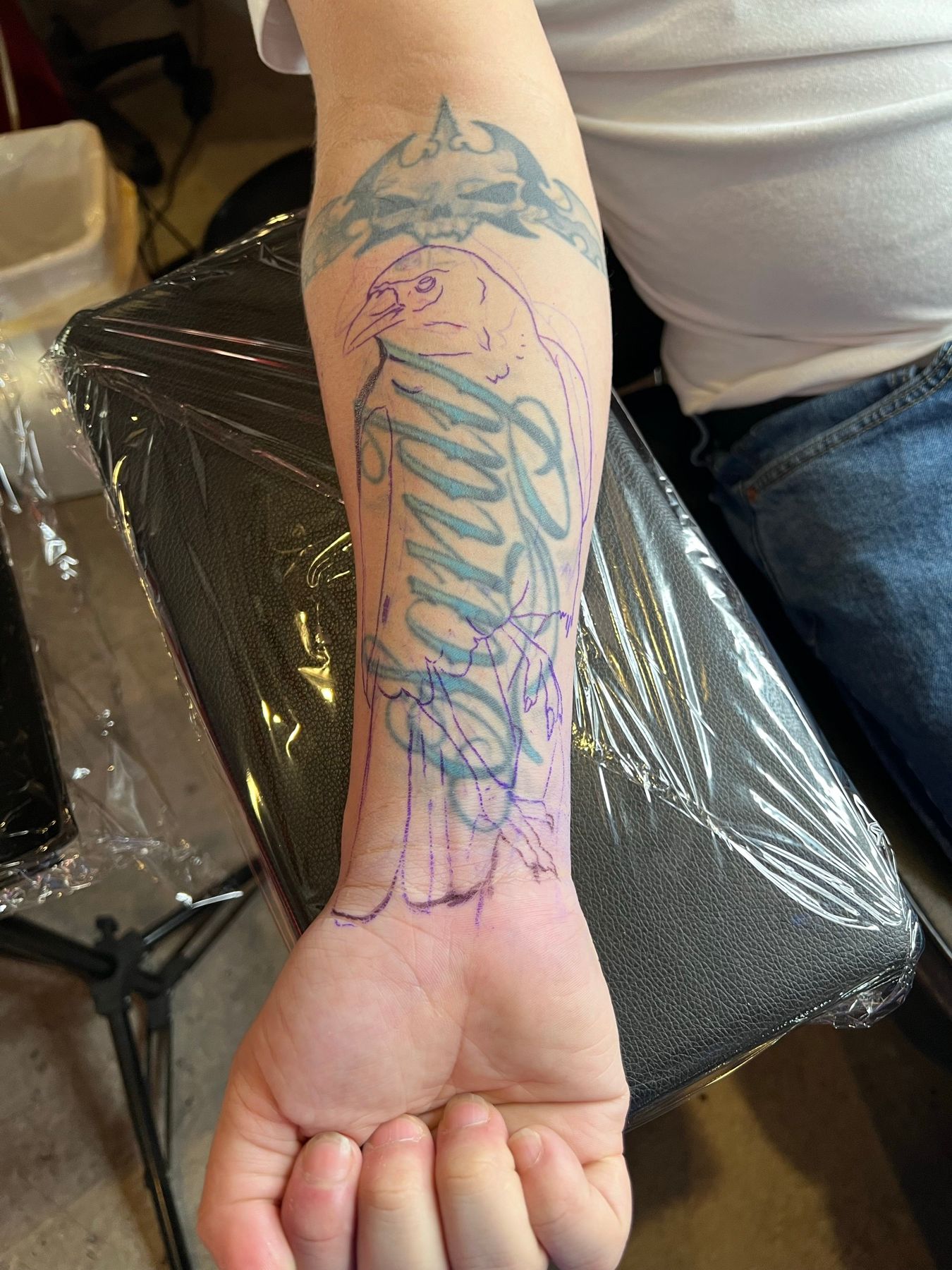
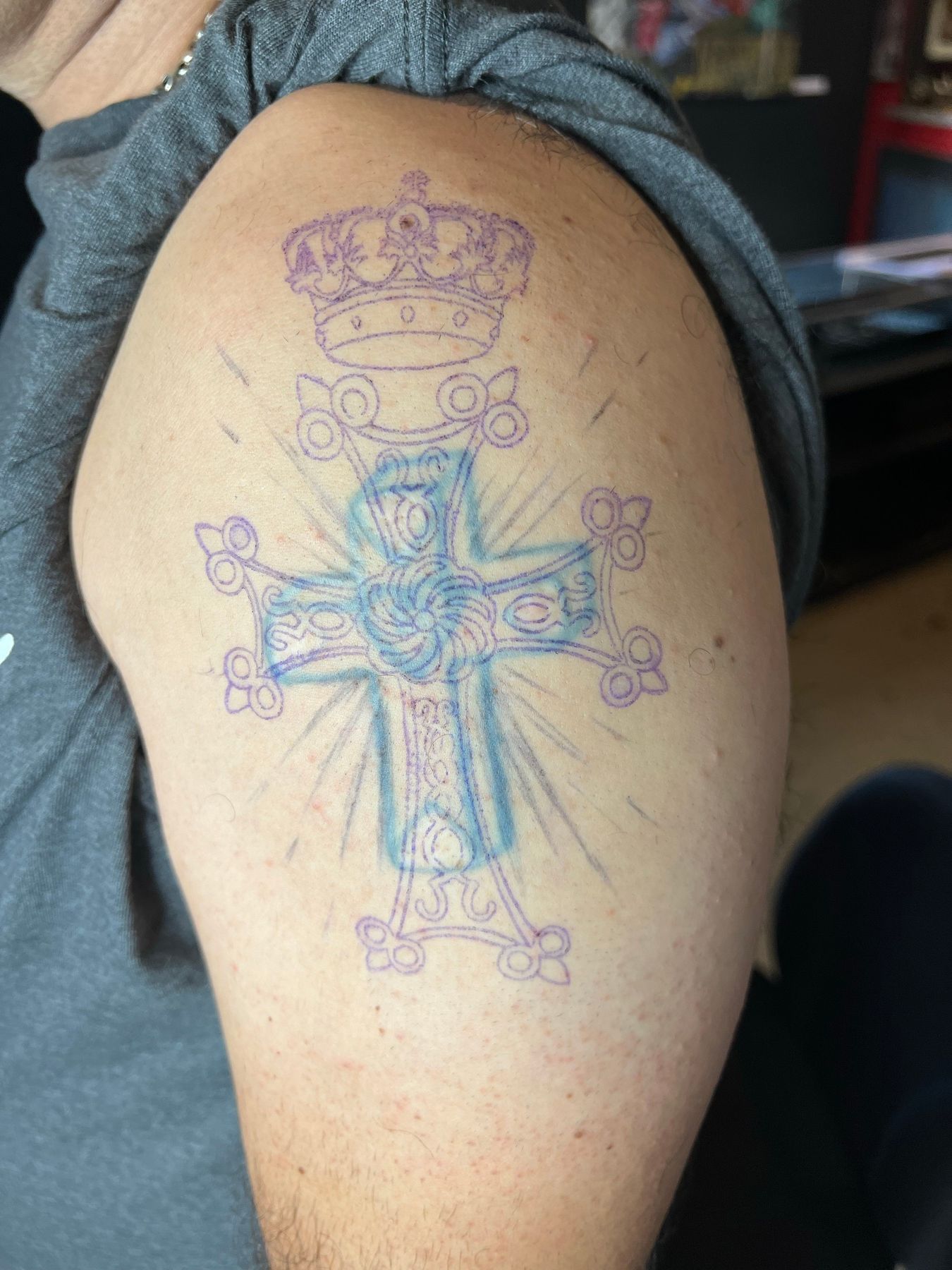
Stencil 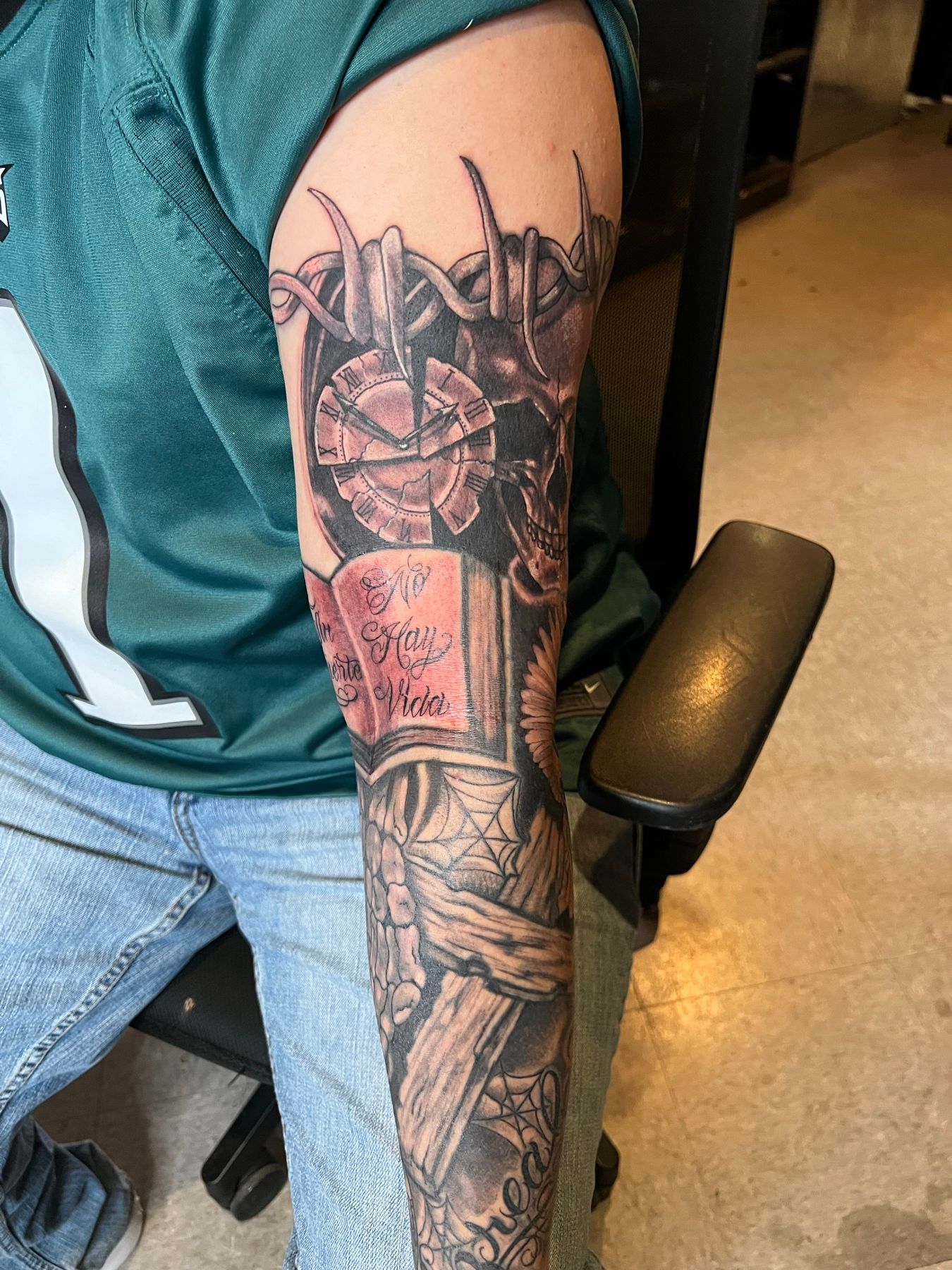
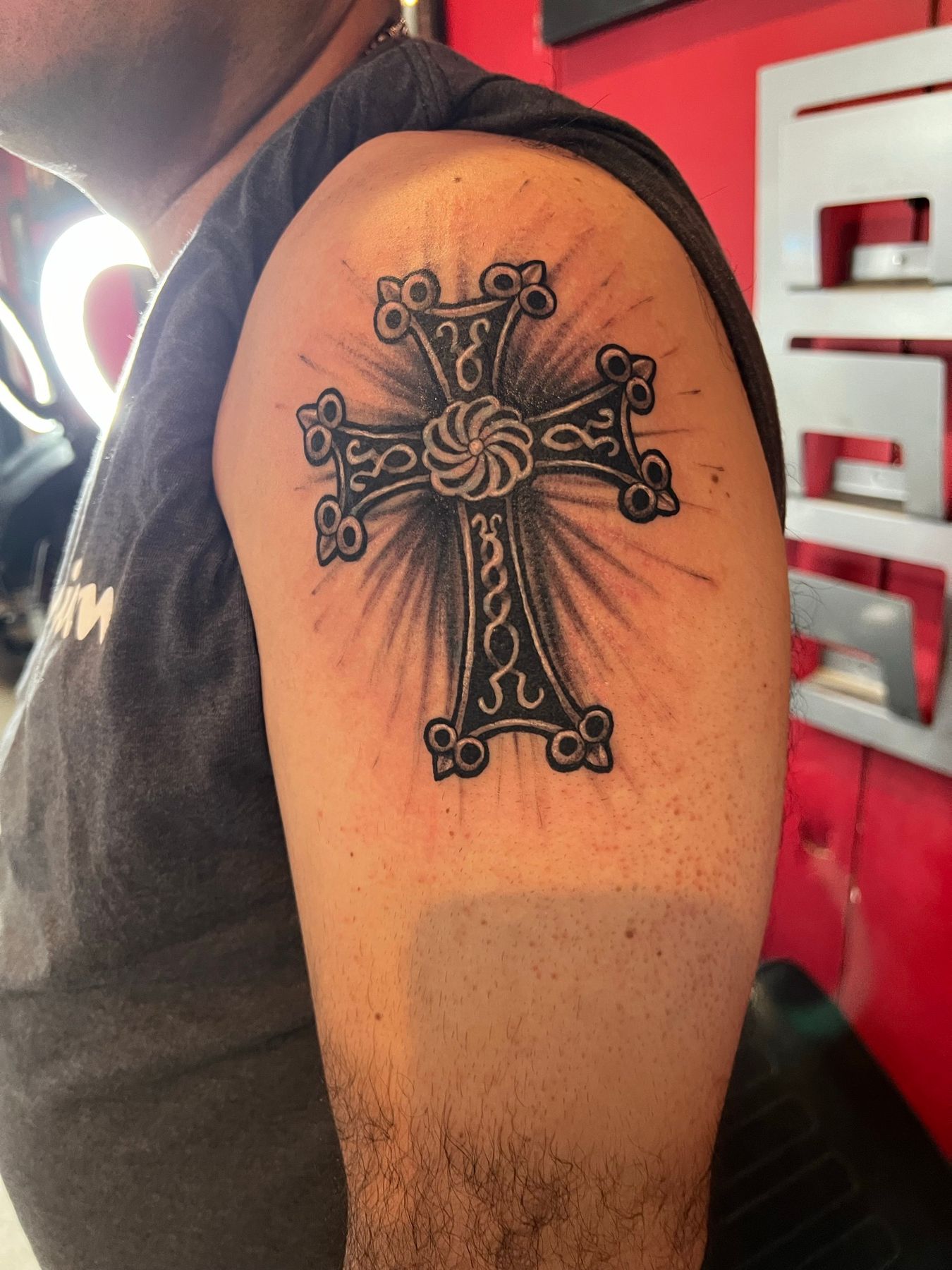
After 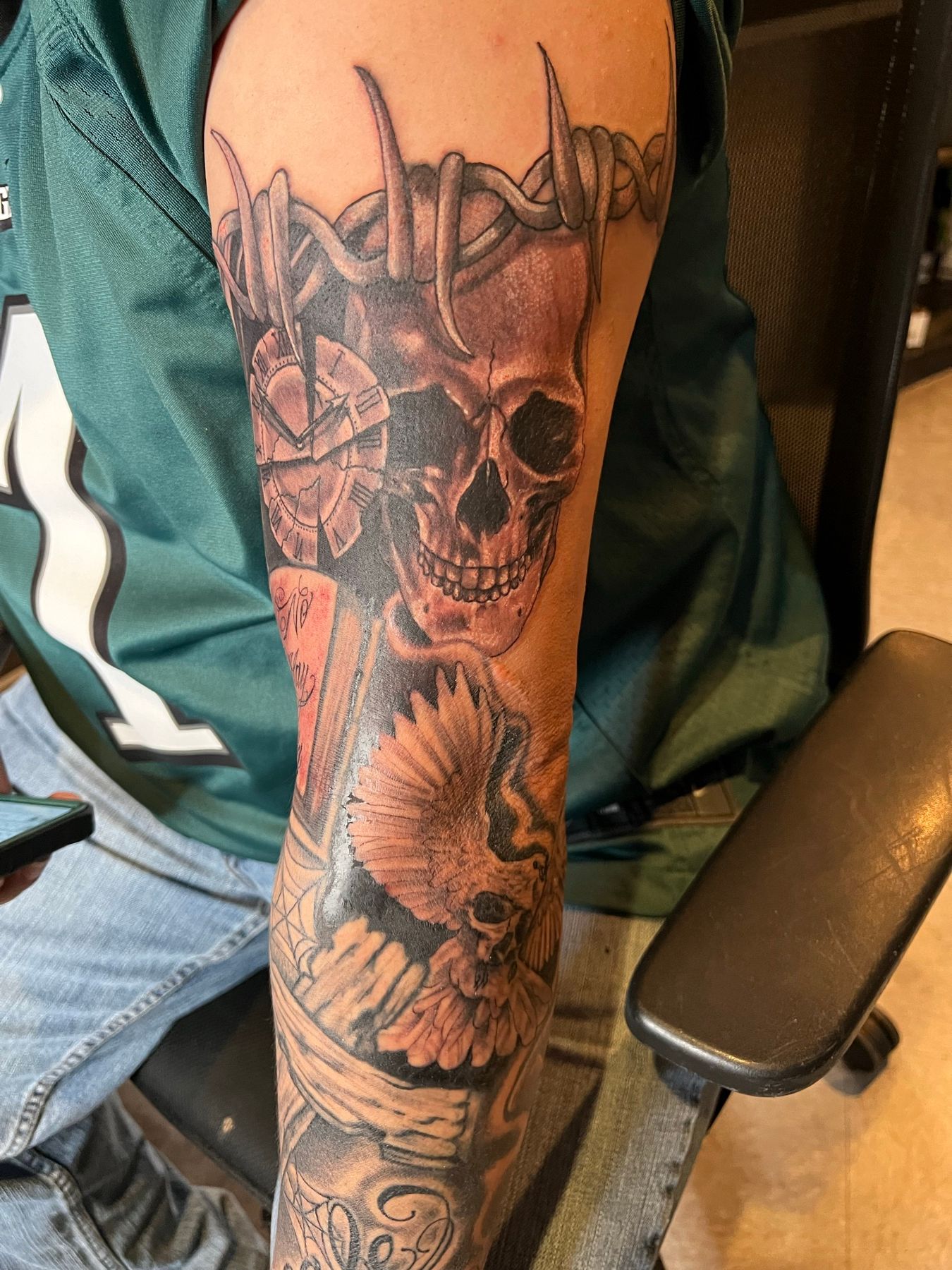
After
 American Ink Sherman Oaks Tattoo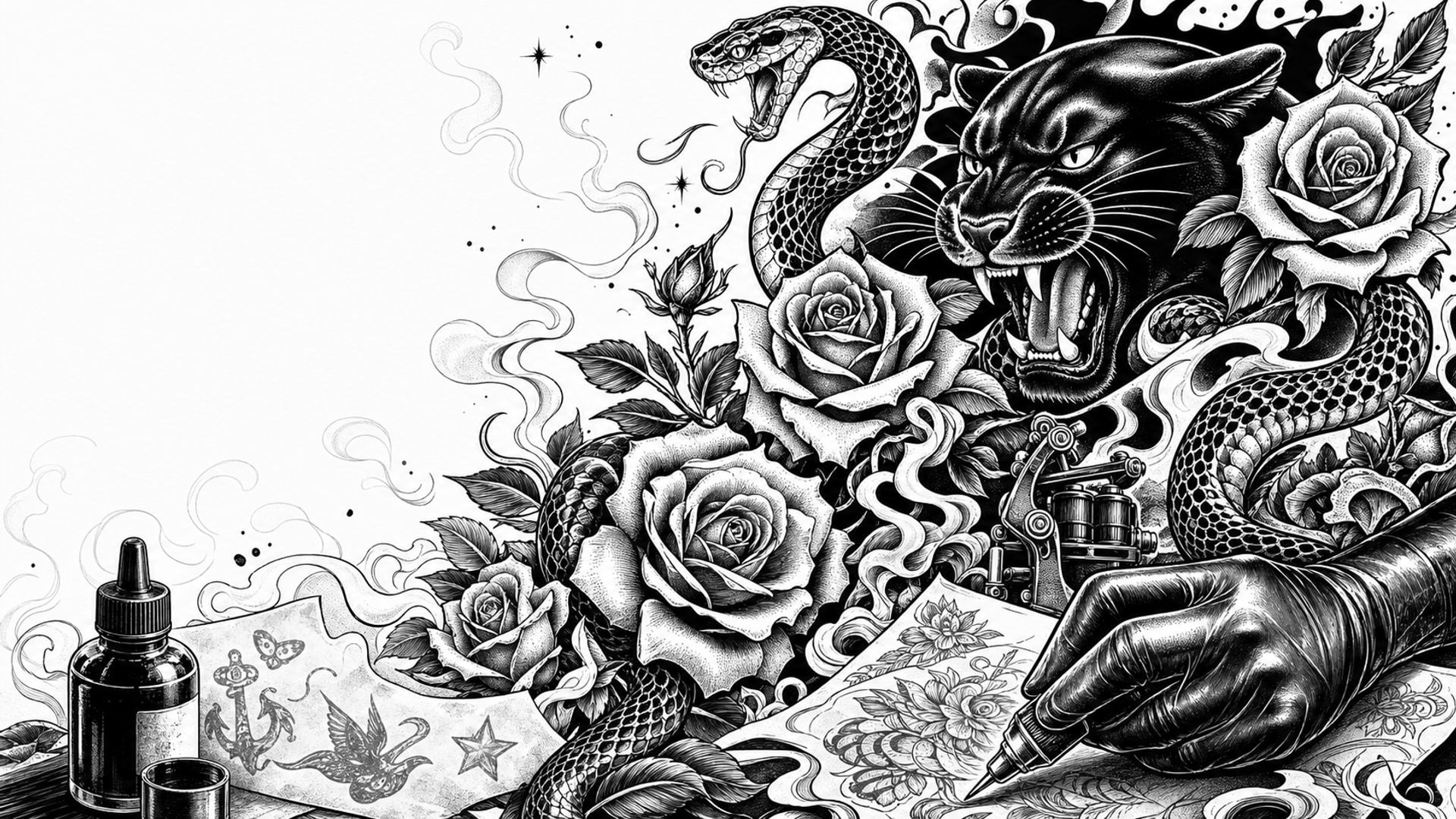
Tattoo cover-ups in Sherman Oaks
Old, faded, or unwanted tattoos reworked into pieces you actually want to wear - starting with an honest, in-person assessment of what is possible.
Real Cover-Ups
Actual work from American Ink: an old or faded tattoo, the stencil that maps the new design over it, and the finished black and grey cover-up.
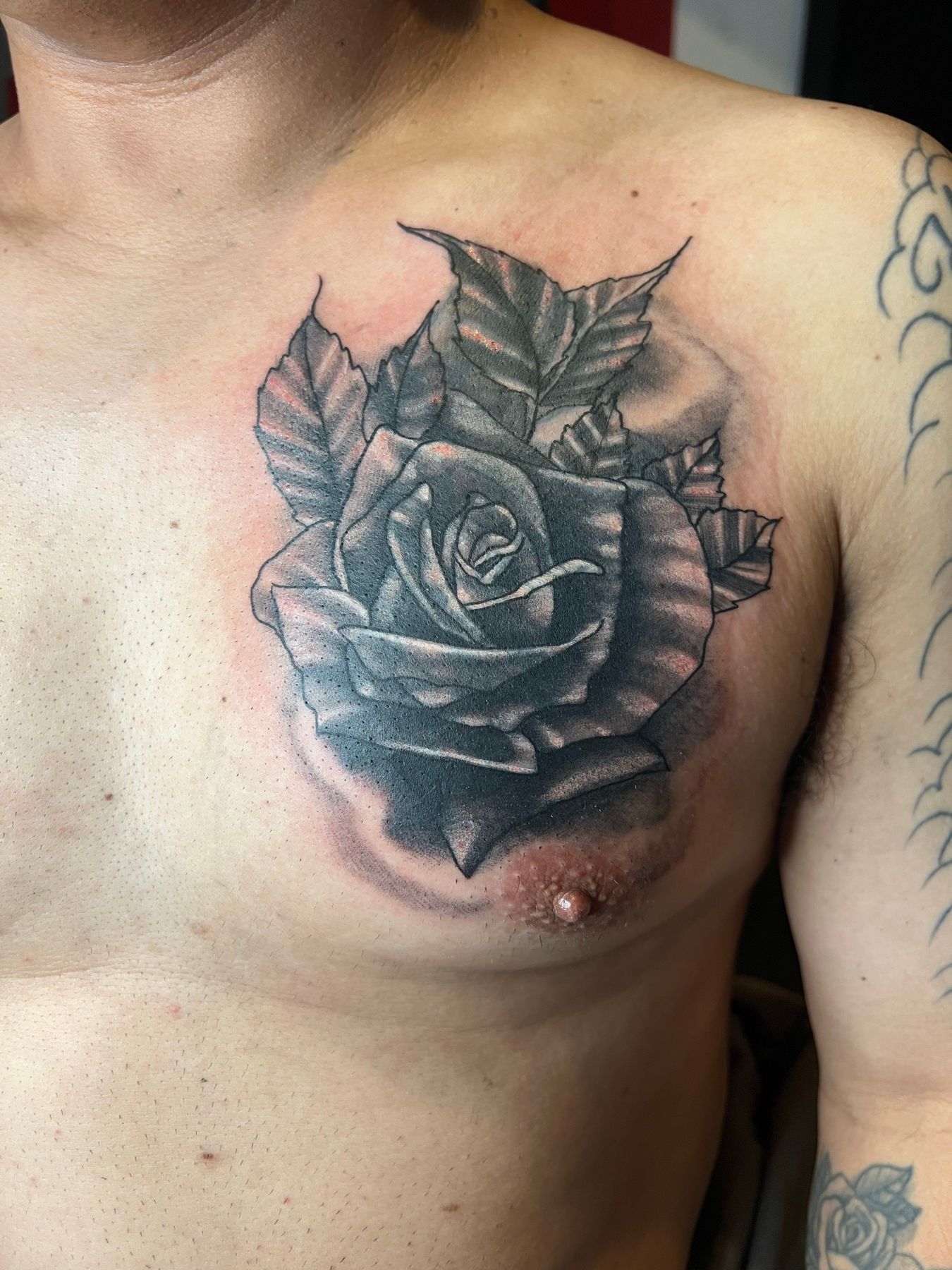
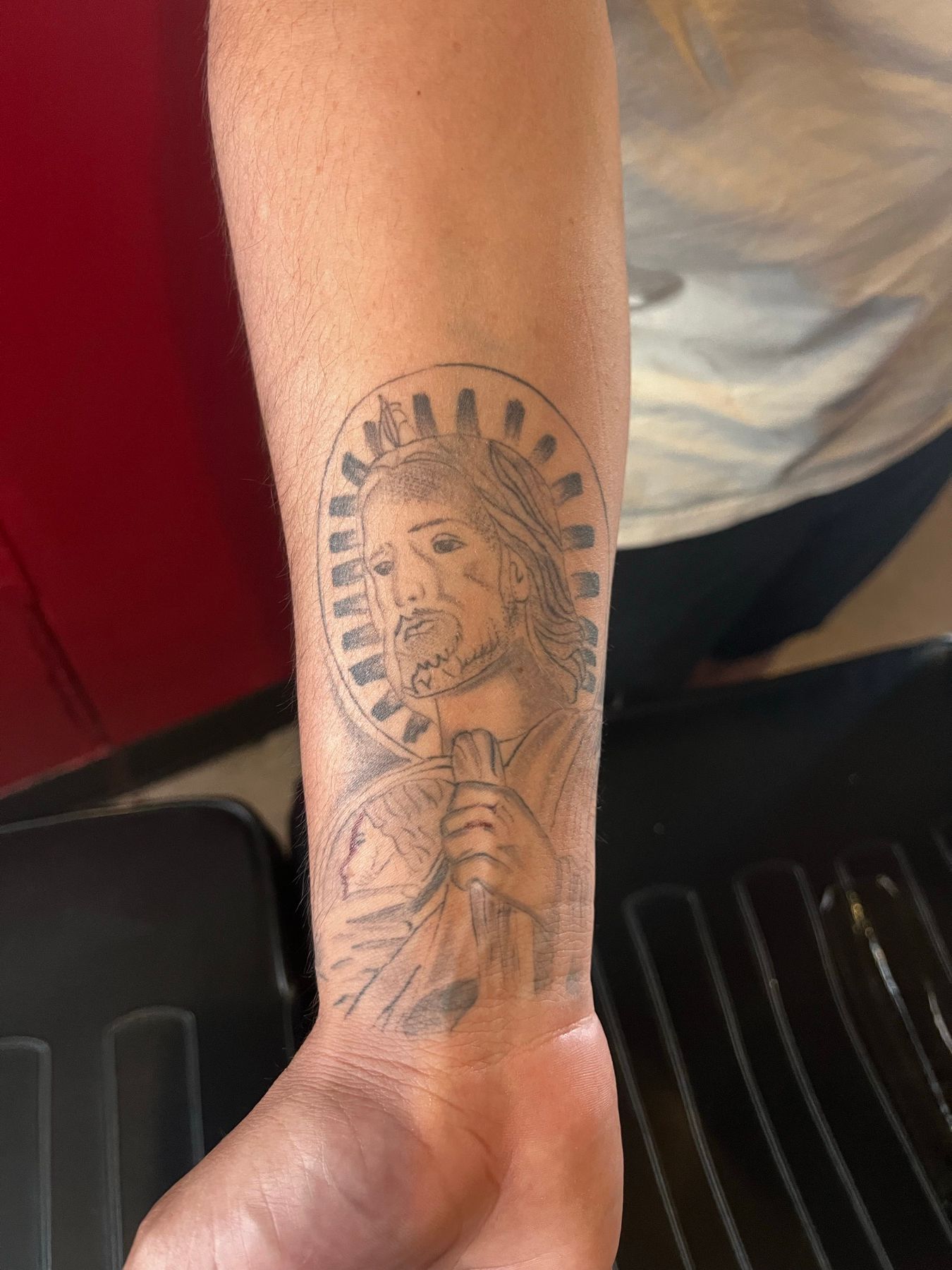
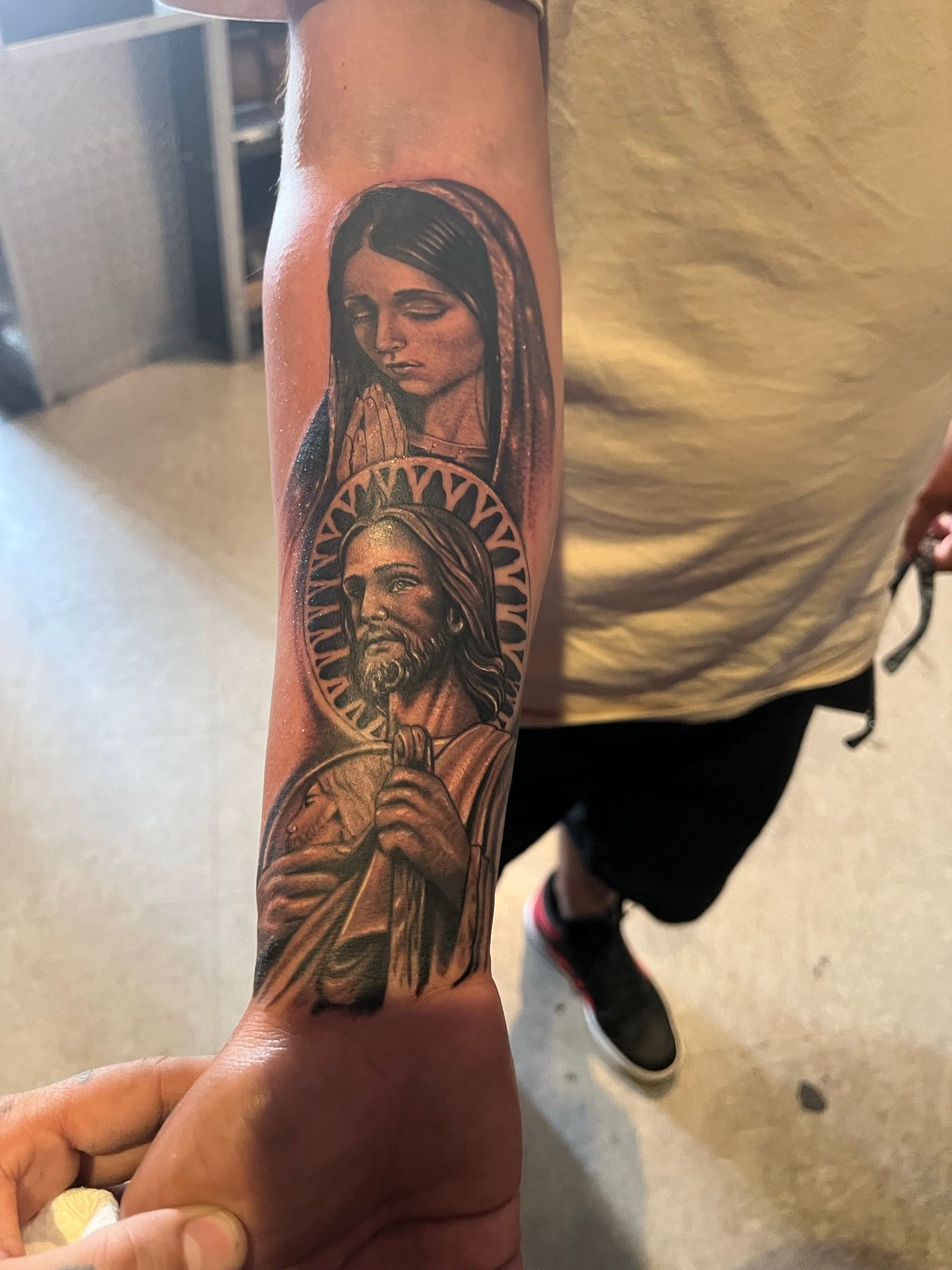
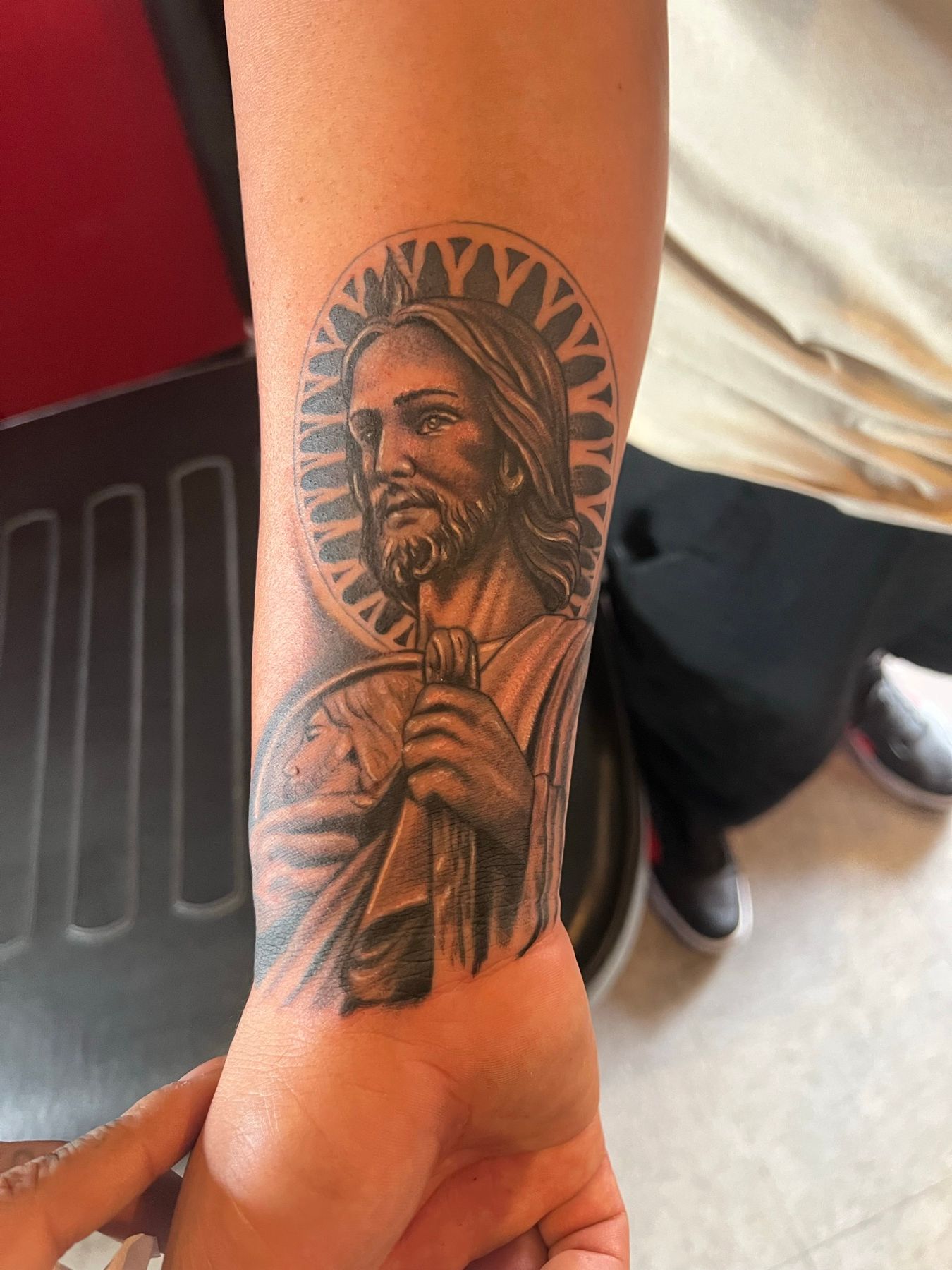
Cover-Ups at American Ink
American Ink offers expert tattoo cover-up services to transform and rejuvenate old or unwanted tattoos. The artists use advanced techniques and creative designs to seamlessly blend the cover-up with your existing tattoo, leaving you with a fresh piece instead of a reminder.
The difference between a cover-up that works and one that fails is honesty at the start. Not every idea works over every tattoo, so each project begins with an in-person look at the existing piece - how dark it is, how dense, how large, and where it sits - before any design promises are made.
The $150 shop minimum applies, and each cover-up is quoted at the consultation once the artist has seen the tattoo and scoped the design.
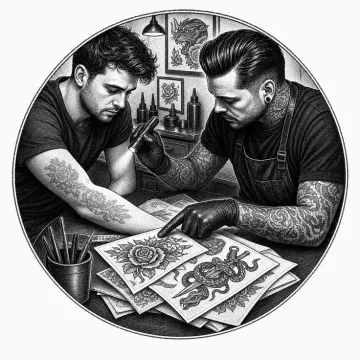
Every cover-up starts with an in-person read on the existing tattoo - and a straight answer about what can go over it.
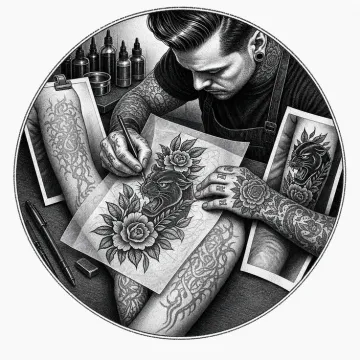
Cover-up artwork has to conceal the old piece, not just look good on its own. The design is built around that job.
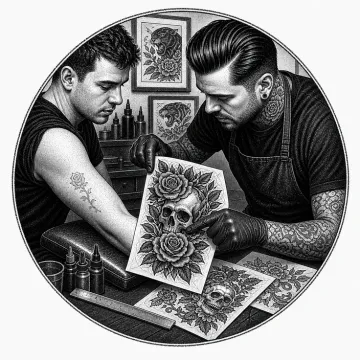
Cover-ups usually run darker or larger than the original. You hear the constraints before the work begins, not after.
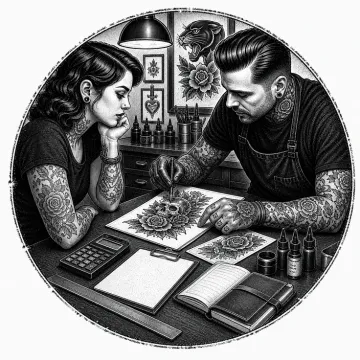
The $150 shop minimum applies; the final price depends on the size, placement, and detail the cover-up demands.
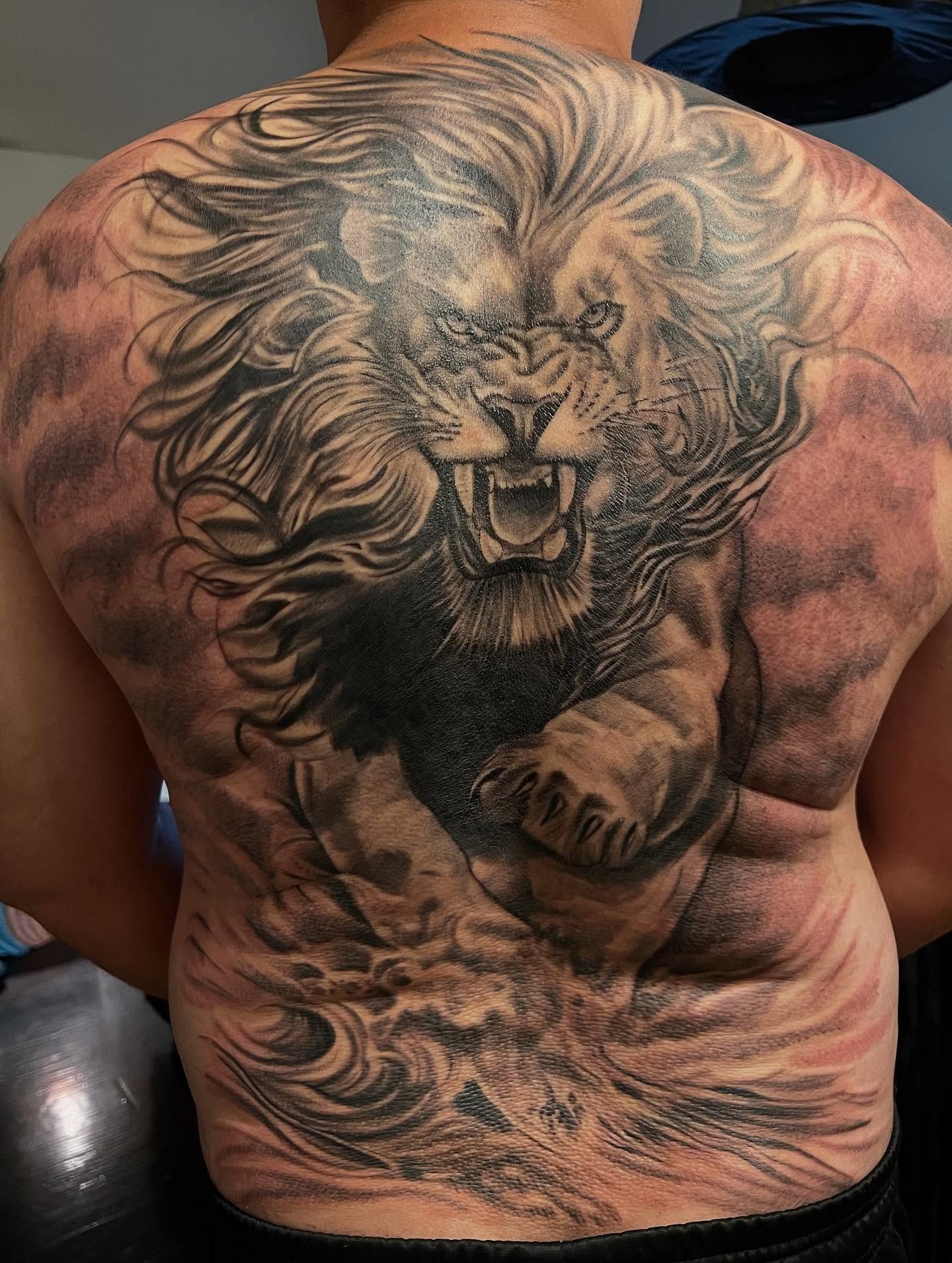
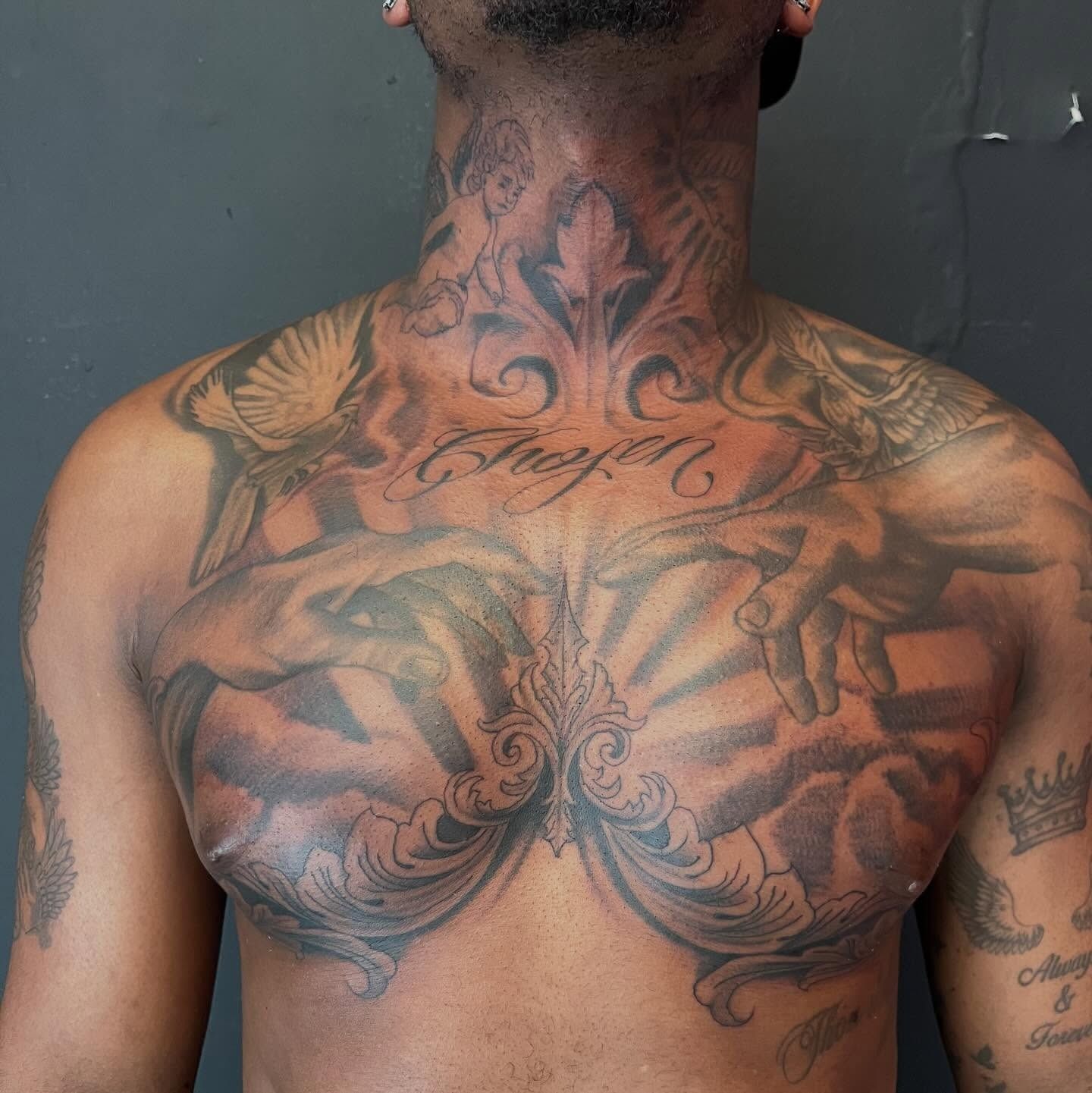
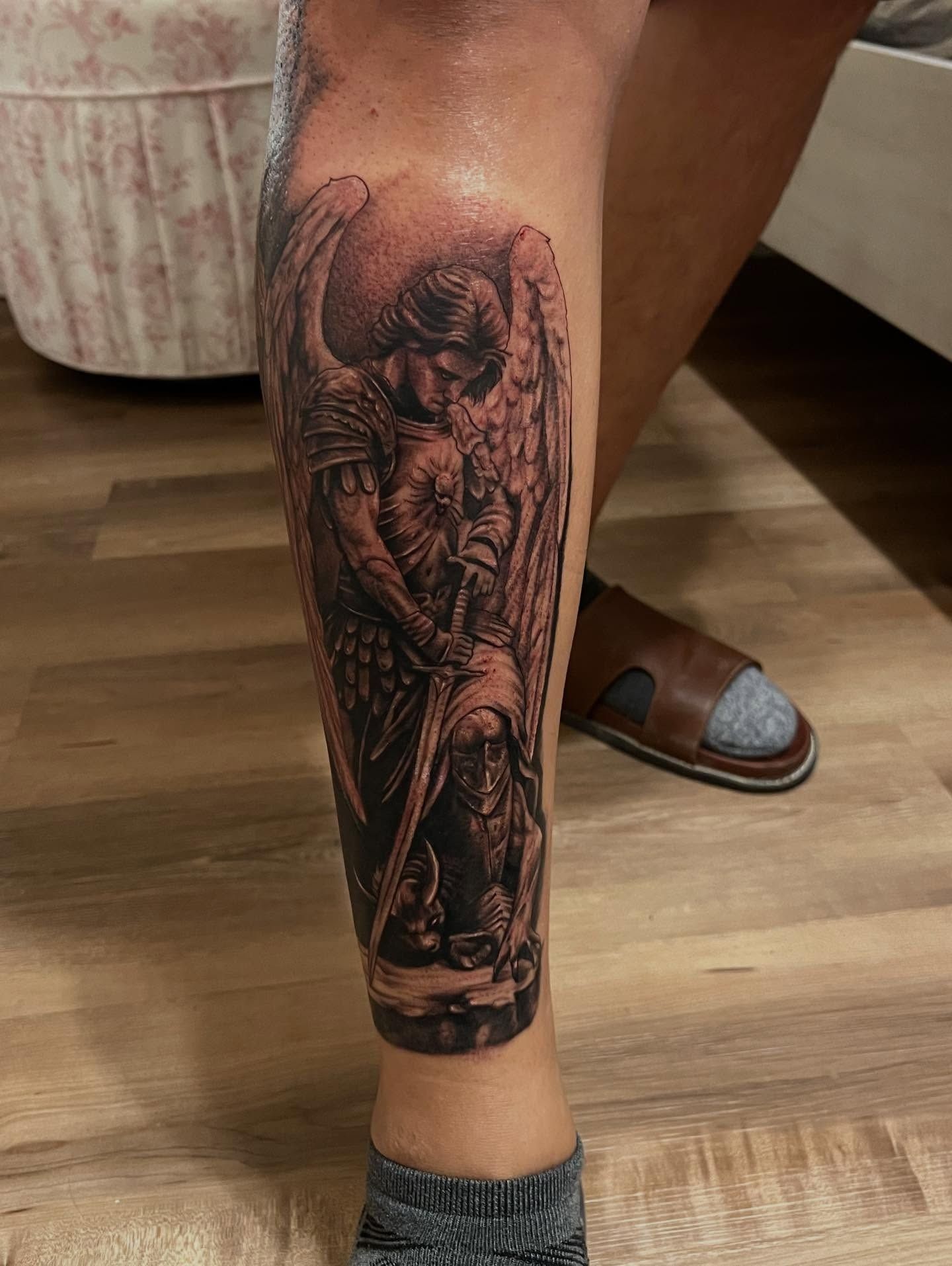
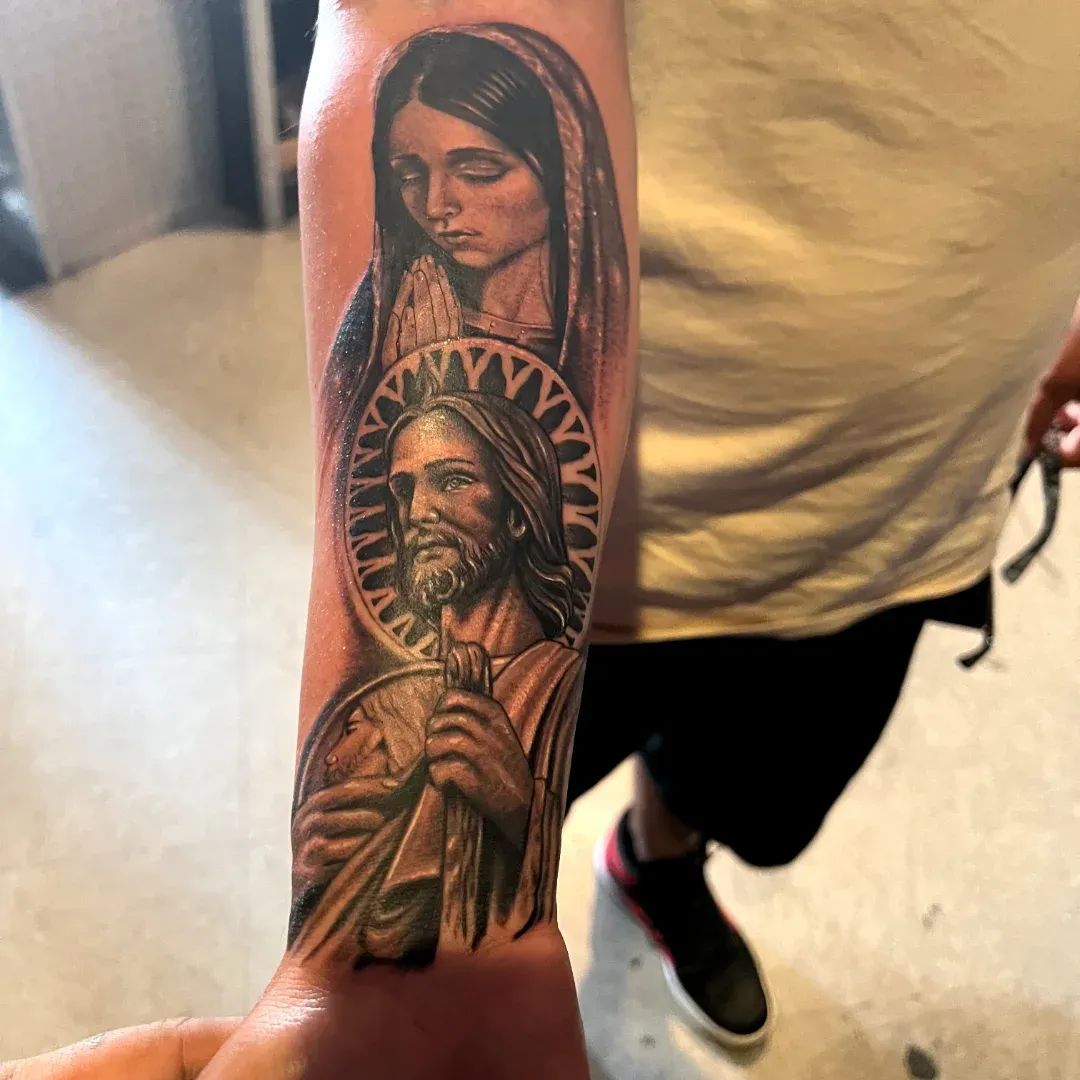
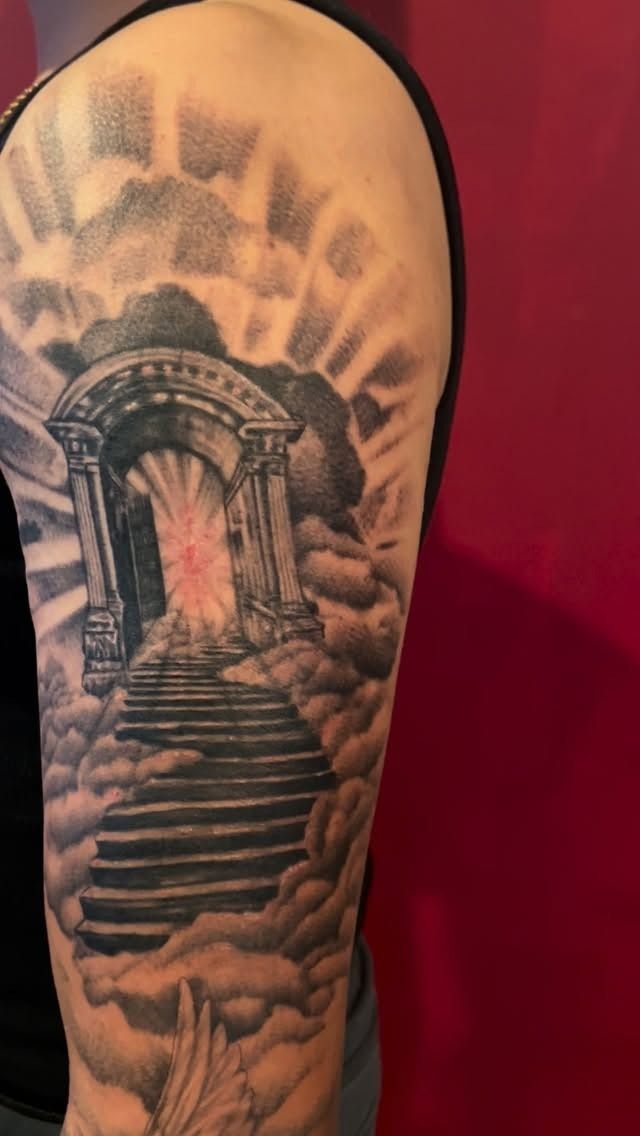
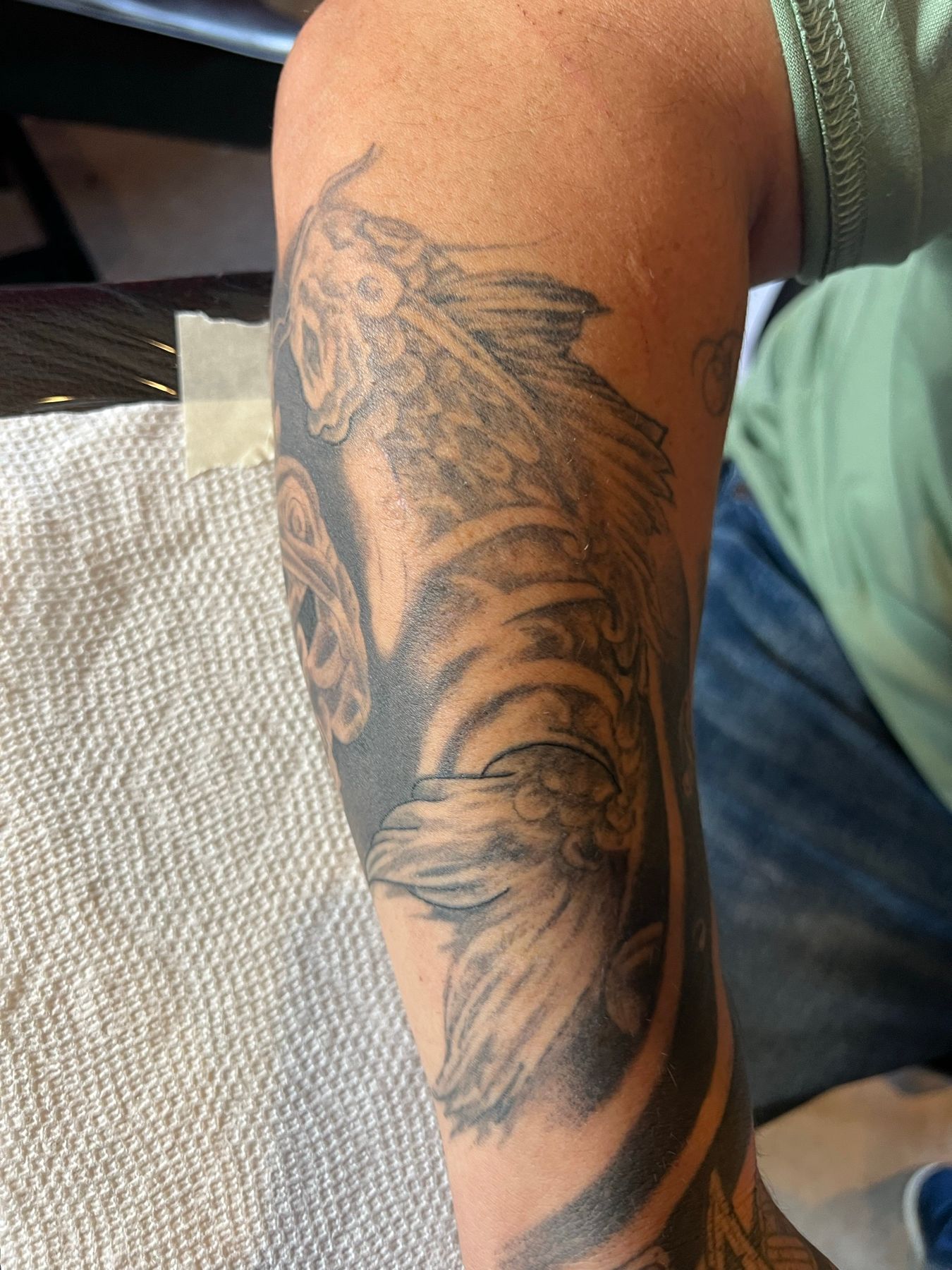
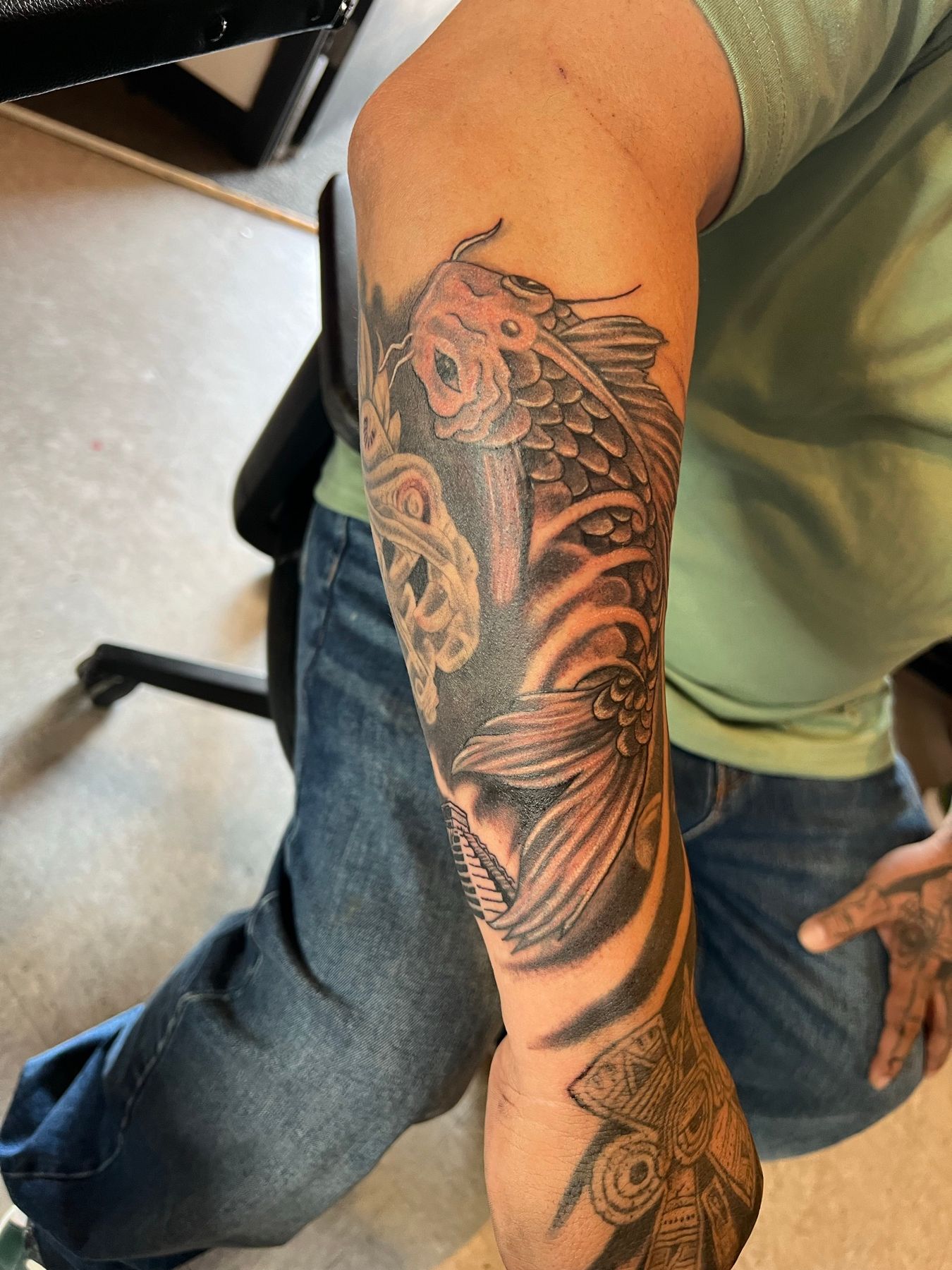
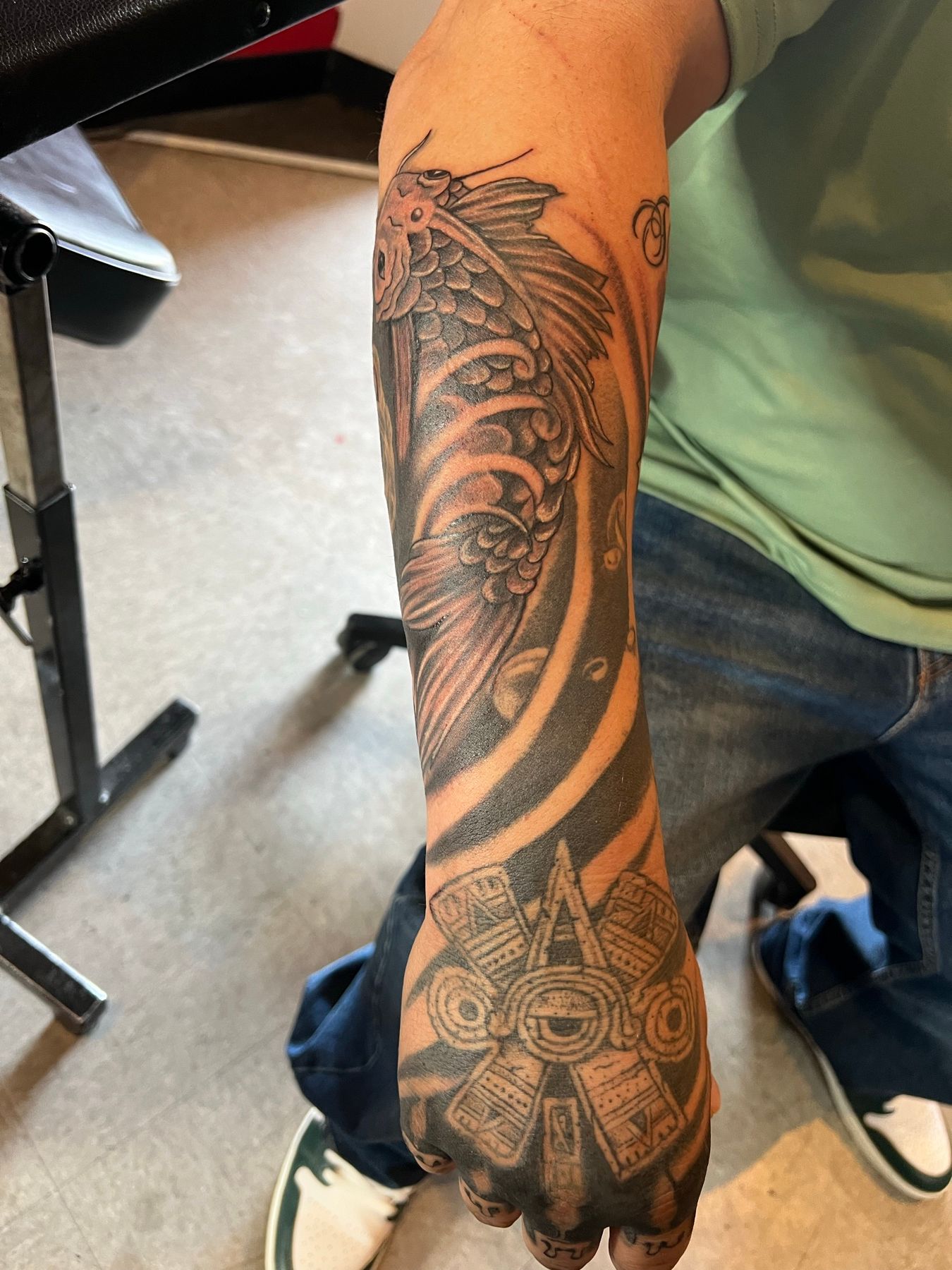
The Style
Examples of the bold, high-coverage black and grey our artists work in - the foundation of a strong cover-up, not before-and-after photos.
Touch-Ups & Reworks
Not every old tattoo needs covering - sometimes it just needs reworking. A rework, or touch-up, rebuilds the contrast, blacks, and detail of a piece that has aged, blurred, or faded over the years, and can add new elements to round it out. The same honest assessment applies: the artist looks at what is there and tells you whether a refresh or a full cover-up is the right call.
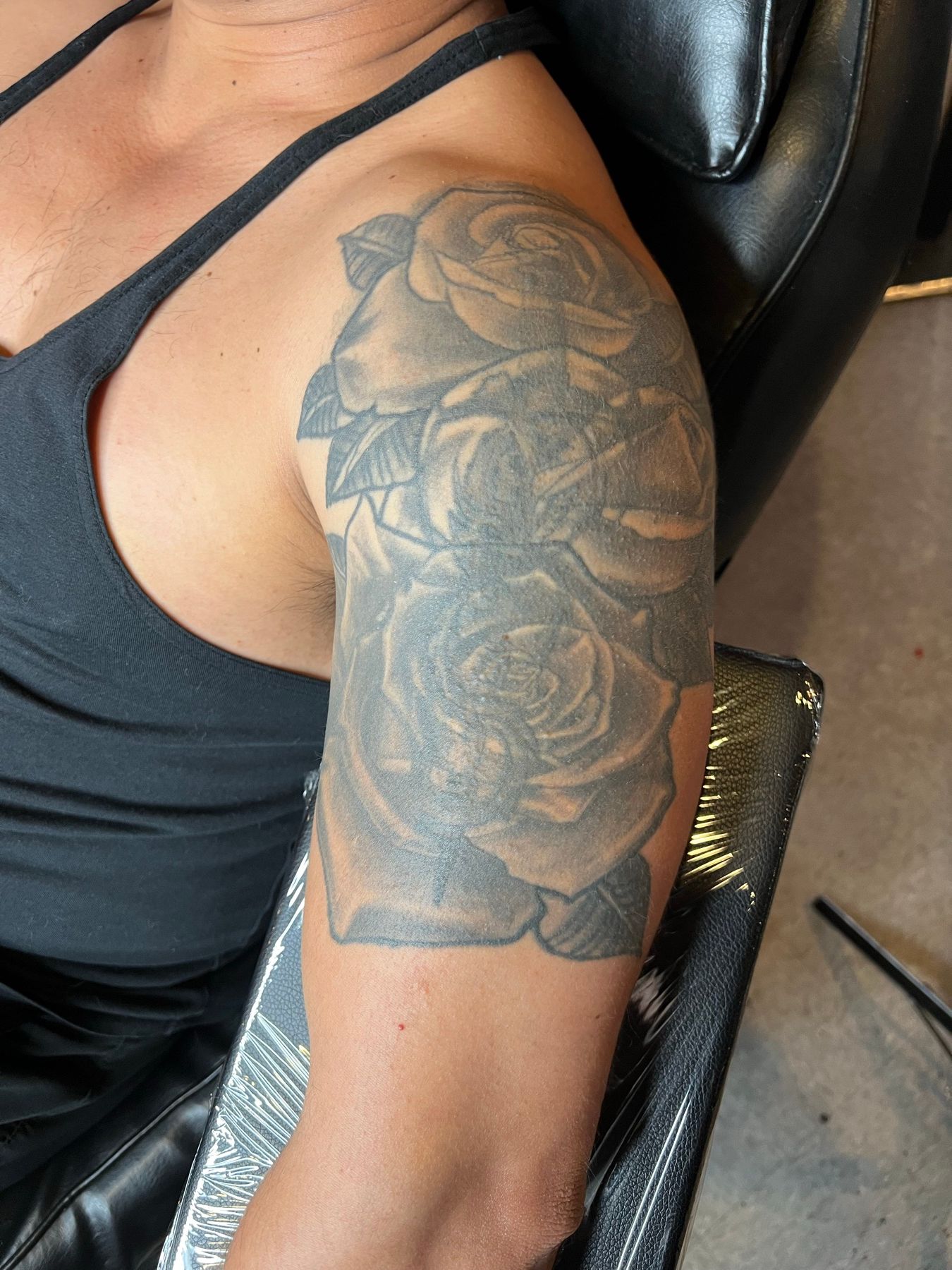
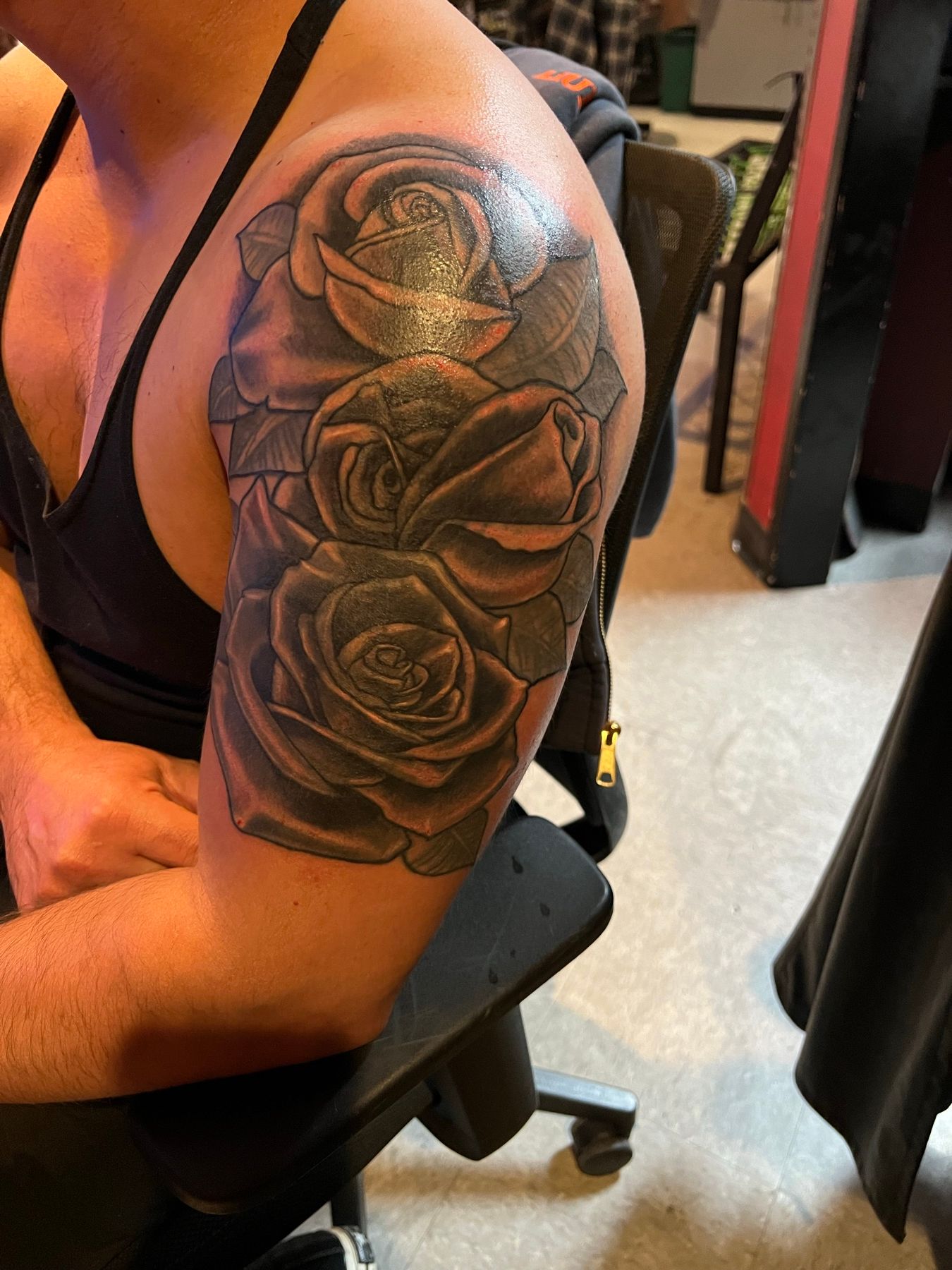
The Assessment
Four things determine what a cover-up can become: how dark the existing ink is, how dense and saturated it is, how large the piece is, and where it sits on the body. Lighter, smaller, or well-faded tattoos give the artist the most design freedom. Heavily saturated or very dark pieces narrow the options - the new design has to absorb the old one, not fight it.
That is why the assessment happens in person, or at minimum from clear, well-lit photos sent with a consultation request. The artist tells you what is realistic at that size and placement, what the design will likely have to do to fully conceal the old work, and whether covering it directly is the right call at all.
Design Constraints
New ink does not erase old ink - it layers over it. If the new design is too light or too small, the old tattoo shows through as the piece settles and heals. To fully conceal existing work, a cover-up generally has to be darker than the original in key areas and large enough to redirect the eye away from the old shapes.
Good cover-up design turns those constraints into the piece: bold shading where coverage is required, flowing composition that breaks up the old outline, and subject matter that genuinely suits the darker, larger format. The artists at American Ink tell you up front what scale and shading your piece will take rather than promising a delicate design that will not hold.
Expectations
Once the design is agreed, a cover-up session runs like any other custom tattoo at the studio: a fresh, sterile setup, single-use needles, and a piece worked carefully over the old ink. Larger or denser cover-ups may be planned across more than one session, and your artist will tell you that at the consultation rather than mid- appointment.
Healed results are the honest measure of a cover-up. As the piece settles, dense old ink can soften the brightness of what is over it - which is exactly what the darker-and-larger design rules are there to prevent. Follow the aftercare instructions you leave with, and check back with the shop once healed so the artist can see the final result.
The Process
Cover-ups reward patience at every step. Here is how a project typically runs at the Sherman Oaks studio.
Come by the studio or send clear, well-lit photos of the existing piece with your consultation request, along with ideas for what you would like instead.
The artist assesses darkness, density, size, and placement, then tells you what is realistic - including whether lightening first would open up better options.
The cover-up is designed to genuinely conceal the old work, and the project is quoted based on the size, detail, and sessions it will take.
The piece is applied over one or more sessions with a sterile, single-use setup, and you leave with aftercare instructions and a plan to check back once healed.
Page FAQ
Short answers for search snippets and real visitors.
Most tattoos can be covered with the right design, but not every idea works over every tattoo. How dark, dense, and large the existing piece is determines what can realistically go on top of it. Lighter, smaller, or faded tattoos give the artist the most freedom; very dark or heavily saturated pieces narrow the options and usually point toward a larger or darker design. The honest answer comes from an in-person assessment - bring the tattoo to the Sherman Oaks studio and the artists will tell you what is possible.
New ink layers over old ink rather than erasing it, so if the new design is too light or too small, the old tattoo shows through as the piece heals and settles. To fully conceal existing work, a cover-up generally needs to be darker than the original in key areas and large enough to redirect the eye away from the old shapes. That is the design reality of cover-ups, and the artists at American Ink explain it up front rather than promising a delicate piece that will not hold.
A cover-up is quoted the same way as other custom work at American Ink: the $150 shop minimum applies, and the final price depends on size, placement, and detail. Cover-ups often involve more design work than a fresh tattoo, because the artwork has to solve the old piece rather than just look good on its own - so plan on a quote at the consultation rather than a flat number. Call (818) 907-6114 to get the process started.
Sometimes. If the existing tattoo is very dark, dense, or compact, lightening it first can open up significantly more design options and let the new piece be brighter or more detailed. Many tattoos can be covered as they are, though, without any lightening at all. Bring your tattoo to a consultation and the artist will tell you whether covering it directly makes sense or whether lightening it first would get you a noticeably better result.
Start with an in-person visit or a consultation request that includes clear photos of the existing tattoo taken in good light, plus your ideas for what you would like instead. The artists assess the tattoo's darkness, density, size, and placement, then sketch a direction that genuinely conceals it. Call (818) 907-6114 or send a request through the booking form to begin.
Book / Visit
Send clear photos of the existing tattoo with your consultation request, or bring it by 14159 Ventura Blvd - the artists will give you an honest read on what it can become.